How we make wide plank white oak flooring
Every board is made in our own factory in Vietnam, on one line, in eleven stages. Drying, pressing, milling, texture, color and UV coating all happen under one roof, which is how one approved sample holds across a whole lot.
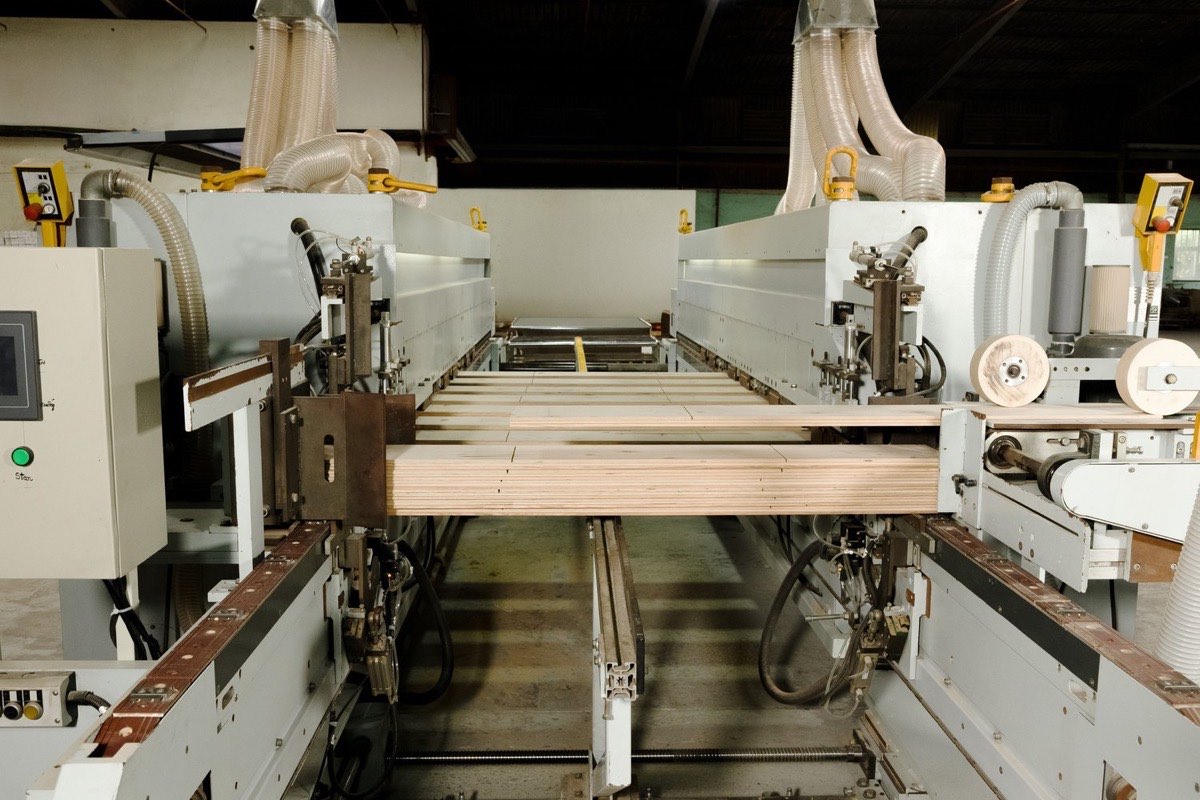
Eleven stages on one line
The route every wide plank order follows. Stages that matter most for wide boards are drying, pressing and conditioning, because they decide how flat the board stays after it is laid.
Raw material selection
Face oak is sorted by grain and color. Core stock is chosen for the build, and incoming timber is recorded by species, grade and origin.
Kiln drying
Lumber is kiln dried and checked against the moisture target for the order. Wide boards depend on this step more than any other.
Wear layer sawing
The oak wear layer is cut to the specified thickness, from 1/16" (2 mm) to 1/4" (6 mm), and checked across the board.
Layer pressing
Adhesive goes on, then face, core and backing are pressed into a balanced panel.
Conditioning
Pressed blanks rest before machining so the panel settles after bonding.
Sizing and sanding
Blanks are sized, calibrated and sanded to the ordered thickness, width and length, then checked against the order sheet.
Surface treatment
Smooth, brushed, hand-scraped or saw-marked texture is worked into the wood and matched to the approved sample.
Tongue and groove milling
Tongue and groove on all four sides, with micro-bevel where specified, for glue-down or nail-down installation.
Finishing
Stain and the specified UV finish go on after machining, each coat cured in line. Unfinished boards skip this stage.
Quality control
Moisture, dimensions, tongue and groove fit, color consistency and finish are checked during the run and again before packing.
Packing
Boards are packed in cartons, palletized and wrapped. Carton labels carry the item code and production lot.
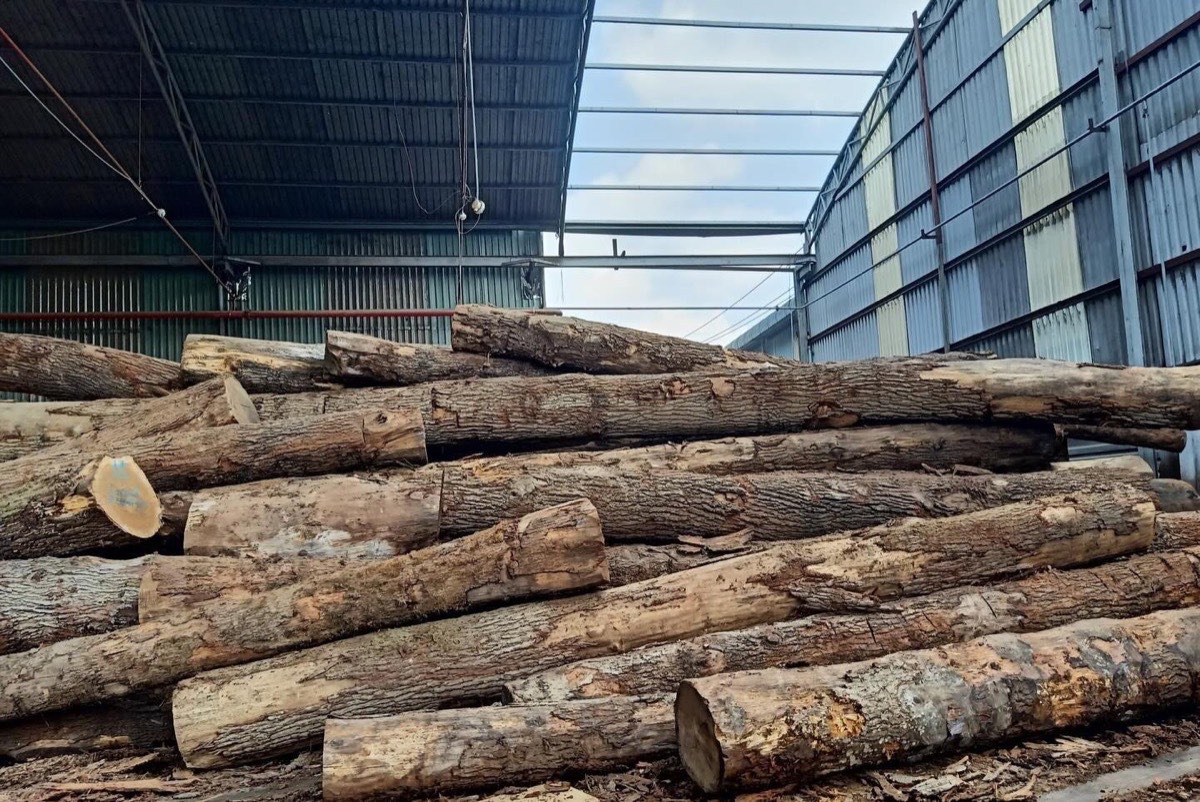
Wide boards start with the wood
A wide face needs wide, clean stock. Face oak is sorted by grain and color before production, and incoming material is recorded by species, grade and origin so each lot can be traced back.
Lumber is kiln dried and checked against the moisture target set for the order. Getting moisture right here is what keeps a 9" or 12" board stable after machining and after installation.
Quality checks before packing
Checks run during production and again before the boards are packed. The approved production sample is the reference for color and finish.
- MoistureAgainst the target set for the order.
- DimensionsThickness, width and length against the order sheet after sizing and sanding.
- Tongue and groove fitProfile and fit on all four sides.
- Color consistencyAgainst the approved sample, through the run.
- Finish qualityCoating and sheen after UV curing.
Packing and loading
Boards are packed in cartons, palletized and wrapped. Each carton label carries the item code and production lot, so any carton on your floor can be traced to its run.
Pallets are loaded for your port. Packing per carton, cartons per pallet and the quantity per container depend on width, length and thickness, so they are calculated on your quotation.
- CartonsLabeled with item code and production lot. Your brand on the carton for private-label programs, confirmed on your quotation.
- PalletsPalletized and wrapped for export.
- Mixed loadsFloor, stair parts and trims for one project packed and loaded together.
- DocumentsExport documents for your shipment, listed on your quotation.
Send a specification to our factory
Width, build, grade, finish and area. We reply within 24 business hours.